
Lielais Kristaps – Latvian National Film Awards 2025

With my interest in Latvian documentary films, that goes back to around 1990, where I was lucky to be one of a group that organised the Balticum Film & TV Festival on the island of Bornholm in Denmark, I wanted to know the nominees for the yearly Award ceremony of Lielais Kristaps (that means Big Christopher and there is a legend (AI Overview): that tells of a giant ferryman who carried Baby Jesus across the Daugava River, found gold, and helped build the city, i.e. Riga)

Thanks to long time dear friend Lelda Ozola, who was also on Bornholm and now serves as the EU Media representative (MEDIA DESK) at the Film Centre of Latvia, I got a translation of the huge number of nominations for the awards – the ceremony will take place on March 1. In the following I put the focus on the documentary section, where five titles are listed:

Aizsniegt dzelmi” (Bored of Borders), dir. Kārlis Bardelis, Artūrs Valdmanis, prod. Līga Skrode This one I have not seen.

“Death of Death” (Frankenstein 2.0), dir. Dāvis Sīmanis, studio “Ego Media” (Latvia), prod. Guntis Trekteris, co-prod. Radim Prochazka, Kuli Film (Czech Republic) Dāvis Simanis is a filmmaker, whose career I have followed for decades. From early works like “Valkyrie Limited” and “Escaping Riga” to my favorite about the library in Riga “Chronicles of the Last Temple” and “D is for Division”. His appearences on this site are numerous and his talent is obvious. That also goes for this essay, where he has traveled the world to meet people, some wise, some seem more charlatans, who have researched how to fight, one says “kill” death. A research-wise impressive film that is too informative and clever for me… sorry Dāvis and Guntis Trekteris, saw it in Ji.hlava and today on my MacBook, it did not catch me.

“Art Born in Agony,” dir. Elizabete Gricmane, Ramunė Rakauskaitė, prod. Uldis Cekulis, VFS Films, co-prod. Arūnas Matelis, Studio Nominum (Lithuania). Juris Kulakovs, national legend, composer and musician is followed closely by the young director Elizabete Gricmane in playful sequences. Charismatic he is Kulakovs, who passed away in 2024.

“All Birds Sing Beautifully”, dir. Krista Burāne, prod. Ilze Celmiņa, Paula Jansone, “VFS Films”. I saw it today and I will use the same word, playful, entertaining and thoughtful as this quote says (Letterboxd): “In the beginning there was the forest. Then came the live performance, and then the film. The yellow wagtail, Eurasian skylark, white-backed woodpecker, corncrake and hazel grouse have not only gotten their voices back, but have taken on human form — clad in elegant tailcoats and bearing names — to recount ancient tales…” Beautiful singing, great cinematography of all the birds.

“The Last Will (Testament)”, (PHOTO) dir. Jānis Ābele, prod. Guntis Trekteris, “Ego Media”, co-prod. Jānis Ābele, Dita Birkenšteina, “Chaland films”. Looking for the ashes of legendary poet Anatols Imermanis, who never went to Paris to meet “professionals”… Two stories are hilarious and deserves to be mentioned: The female journalist, who interviewed him – that was his condition – naked, she said yes and was shocked, when he lifted the blanket… it was like the Tour Eiffel, she says! And his friend who brought in “half corona” cigars from the West through customs showing an official document claiming, that cigars was medicine for the poet to help his low blood pressure!!! Lovely, wonderful, entertaining.

BUT BUT BUT where is the masterpiece of Laila Pakalnina, “Scarecrow”, produced by Uldis Cekulis. A film that takes place at the Riga airport, where men and women are employed to take care of the wildlife that is active on the runaway. An homage to the people with that job, chasing rabbits and birds to protect them from the airplanes. When traveling to and from Riga, I now book a window seat to look out at the animals and people. Laila Pakalnina is a master, her films have a personal style, she has been to festivals all over and right now she is in Paris for a Baltic retro in la Cinématheque Francaise.

All right, she is on the list of nominees in the section of “Best Director” and her cinematographer Māris Maskalāns is nominated for best cinematography. And “Scarecrow” is also nominated for Best Composer and Best Sound. But for me “Scarecrow” would have been an obvious candiate for Best Film.

An important PS concerning the category Best Minority Co-Production, where I find two fine films that I have seen, both praised on this site:

“Redlight to Limelight”, dir. Bipuljit Basu, prod. Nilotpal Majumdar, “Bindubot Communication” (India), co-prod. Uldis Cekulis, “VFS Films” (Latvia), co-prod. John Webster, “JW Documentaries” (Finland)

“On Sacred and Profane”, dir. Giedre Beinorjūte, prod. Jurga Gluskiniene, Monoklis (Lithuania), co-prod. Elīna Gediņa-Ducena, Gints Grūbe, Mistrus Media (Latvia)

It pleases my “Baltic Heart” that there are so many coproductions between the three countries.
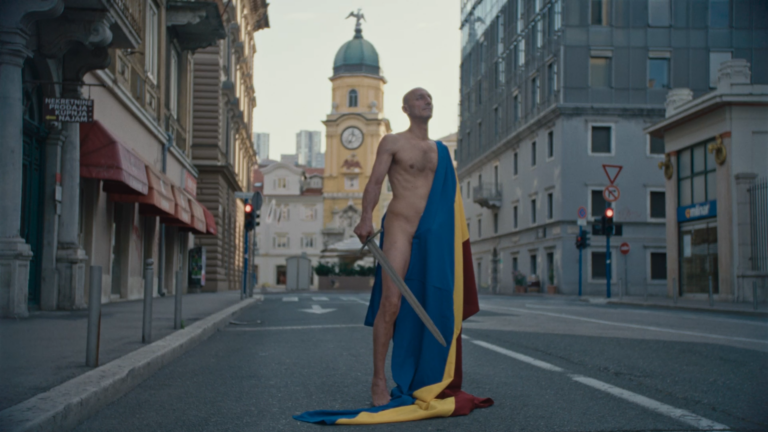
Igor Bezinovic: Fiume o Morte/ EFA Best Documentary 2026

This film totally blew my mind. Its freshness, its originality, its playfulness, giving information so it’s never dull and using the cinema language wonderfully. Archive – moving images and photos to make history alive, citizens of Rijeka today, all centered around a mad poet Gabriele d’Annunzio…

I have always wanted to visit that area, where Italy and Slovenia and Croatia meet each other, Rijeka is now on my list, indeed! And this film reminds me of what documentaries can do, taking us back in time, from today, in an entertaining manner. In other words it is a great film, why… read the director’s impressive introduction, says a lot: 

“By making this film I wanted to get to know the past of my hometown Rijeka/Fiume, but also to get to understand it’s present state from a new perspective. During this process I’ve met hundreds of my fellow citizens who wanted to work on the film in front of the camera or behind it. I’ve met drivers, politicians, dustbin collectors, archivists, doormen, cooks, musicians, professors, translators and waiters who all had ideas about what this film should be like. I’ve also met historians of all kinds, from those who saw D’Annunzio as the crazier version of Mussolini to the ones who saw him as the Italian Che Guevara.
Besides meeting new people I’ve also read thousands and thousands of pages on D’Annunzio in Fiume, and while doing it I was not only gathering facts but was also shaping my own political ideas.
One idea, however, stayed clear to me all the way. That idea is formulated in a political pamphlet published in Fiume in 1922, soon after D’Annunzio’s departure: “Long live Fiume, free and independent from any kind of rescuers, liberators and protectors!”.
I made a film with my fellow citizens and for my fellow citizens, building a chronological story that we’ll be able, I hope, to retell to new generations. I also hope that our film will help the audiences outside of Rijeka think about how much they know about the histories of their own hometowns and about how these histories got remembered and retold.
In his lesser-known essay from 1960, Pier Paolo Pasolini calls D’Annunzio’s occupation of Fiume a “pagliacciata narcisistica”, “a narcissistic escapade”: D’Annunzio saw Fiume as a personal playground, as a place where he could experiment and practice everything that came to his mind.
By making this film I wanted to keep D’Annunzio’s idea of Rijeka/Fiume as a playground, but this time the citizens of Rijeka are the ones who are playing.”

Croatia, Italy, Slovenia, 2024, 113 mins.

Weronika Mliczewska: Child of Dust

This film has toured to festivals all over and won several awards. I was in the international jury at WatchDocs in December 2025, where it took the first prize in the National Competition. No need for me to repeat wise praising words of the jury, so here they come:

“It is an emotionally moving, multidimensional, intellectually ambitious, sharp social criticism, at the same time intimate and taking on public, private and political issues, talking about a historical issue but also extremely relevant. It’s a movie about how long the teddy bears are — it touches several generations every time. It’s a story about a moving absence of a father, about racial discrimination, and about a system that, although it seems to try to save a man, abandons him back to fate and separates him from his family again. It’s a visually beautiful image, with tenderness following the hero’s long and painful journey to regain his identity, sense of dignity and peace of mind. Tears of sadness and tears of joy of Mr. Sang, the extraordinary hero of the movie “Dust Child” directed by Weronika Mliczewska, will stay with us forever.”

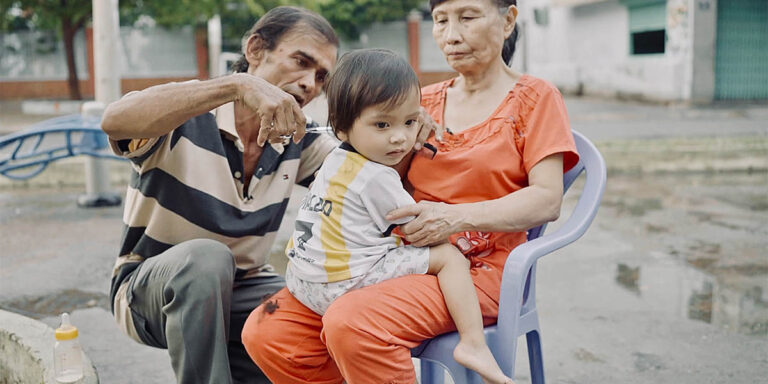
… though I don’t understand the sentence a movie about how long the teddy bears are, please help me,,, Anyway what moved me mostly were the scenes with Sang and his grandchild, who loves him and wants to fly with him to America. These scenes are full of love, they are true documentary moments, that’s why I chose the photo above, where Sang is cutting the hair of the little boy. The story itself is more or less predictable, we know it will be more than difficult for Sang to settle, he does not know how to write in Vietnamese and now he is to learn American. The film captures that in an excellent way. And for the story it is of course a scoop that the American family has a lot of problems; the father, Sang’s father, comes out sympathetic but had not really been a father for his American children… oh yes, as someone has put it, “family is the worst institution we have invented”. Thanks to the daughter in the American family Sang gets a place to stay and a job, and the father comes to visit. Sang stays in America, he wants to give the little boy a better life than the one, he had growing up in, in Vietnam without a father. The director has tread carefully towards her protagonists, not easy I guess. She is not pointing fingers, leave it to the audience. Thank you! The music… a matter of taste, for me too much here and there. Conclusion, impressive work, for brain and heart.

Poland, Sweden, Qatar, Vietnam, Czech Republic

92 mins.

❤️ ❤️ ❤️ ❤️ ❤️

Krzysztof Kopczyński: Inga

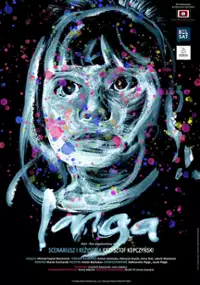
Lovely with a short film on this site. In this case a gem. Polish, directed and produced by Krzysztof Kopczyński, who – again, see note below – delivers professional camerawork (Michał Popiel-Machnicki) and sound and editing. Inga is a little Ukrainian girl, who has fled the country at war and lives with her blind parents along with five cats and a dog (!), after Russia invaded Ukraine on her fifth birthday. She is full of life, gives directions to her father in the streets, dresses up and lets her mother guess, what she looks like.

Her father went blind, when he was 13 and apparently Inga could lose her eyesight as well. It’s very touching, when you see her close her eyes as if she wants to know how it is to be blind.

Krzysztof Kopczyński has chosen some everyday scenes from their home, some birthday celebrations, including Inga’s and her grandmother’s, also blind, who turns 65. There is a wonderful scene, where Inga tells her family about a statue in a park and there is a fine sequence with the father going to Ukraine on a special mission.

28 minutes – I wonder if the director has thought of a continuation, following how life goes on for Inga?

Poland, 2025, 28 mins.

❤️ ❤️ ❤️ ❤️

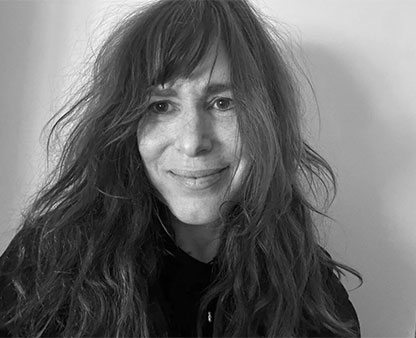
About Krzysztof Kopczyński (from the website Polish Docs)Documentary filmmaker, PhD, Professor at the University of Warsaw. He produced over 50 documentaries which have been shown at festivals in 70 countries at least and won about140 awards. Director of documentaries “Stone Silence” (Afghanistan, 2007, screened in 40 countries) and “The Dybbuk: A Tale of Wandering Souls” (Ukraine, 2015, 20 countries). He is a winner of 25 film awards and a member of the European Film Academy as well as the Polish Film Academy.

Dmytro Sukholytkyy-Sobchuk: Silent Flood

For readers who do classes in documentary films and want to teach how to start a film, the opening, take an inspirational look at “Silent Flood”:

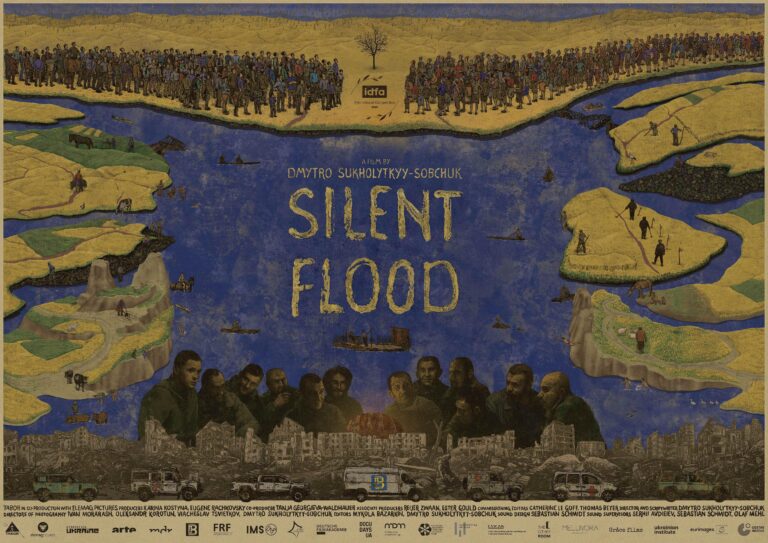
A scenery at a river, hard to grasp because of a dense fog that slowly is lifting, accompanied by old voices off screen telling stories from the past. Stories about bridges that took people from shore to shore but were bombed and destroyed during two wars. The first and the second WW. And never built up again. An amazing opening of a film, that is the filmmaker’s prologue to a film, like one rich painting turned into a film. I felt like I was in a museum going closer and closer to a painting to discover.

A kind of raft is taking people across the river Dnister in Ukraine. A text announces the first chapter: The Shores of Eden. A magnificent sequence follows with a boy on horseback in the river. He and the horse have a hard time in the water but they enjoy. Paradisiacal.

Cut to children playing, a male voice off tells us with whom we are, “the saved ones”, later called the “Old Believers”, similarities to the Amish in the US – no electricity, no machines, no smoking, no drinking, no electronic devices. It is a very playful chapter and it goes from winter to summer images keeping the framed images. And the women washes their clothes in the river like the mother of Hans Christian Andersen did 200 years ago. Adventurous.

Next chapter is “Bread”. A male voice from the village talks about floods that Dnister has experienced. And about the villagers – “they call us the “dark people”. From 1850 we have stayed away from “modern life”, we believe in helping each other, we don’t go to war. He anticipates that there will be a Third WW, where a third of the world´s population will perish…

Bread… a woman kneads the dough, makes it into the form of a bread and puts it into the open fire oven. A mother cuts slices of bread, the father in the background, all women have their hair covered, the men wear hats, we don’t see them but we see a huge storage room, where the bread goes before it is taken to the front, to the soldiers 1300 km away to the East of Ukraine…

… to “Echoes of War”, the name of that chapter, where – wonderful sequence – the soldiers are enjoying christmas in a hut. They eat the bread from the religious community, talking about the villagers, about the young girls in the community, who are not given the chance to study as their mission is to give birth. They talk with respect and they talk about the varynyky, the wonderful Ukrainian dumplings (that I was introduced to when in Kyiv for the festival years ago)… The chapter, contrary to the rest of the film, ends with close-ups of faces of (some of) soldiers. Here they have a rest, but next day(s) is back to the front. Beautiful!

Epilogue. Soldiers with minesweepers moving slowly. The camera makes a 360 degree movement, bombed environment. A girl talks about explosions, about her father losing a leg, an unexploded mine is set to explosion, the girl sings a song, hope?

MUST mention the names of the camerapersons:

    Ivan Morarash,
    Oleksandr Korotun,
    Viacheslav Tsvietkov,
    Dmytro Sukholytkyy-Sobchuk

Ukraine, Germany, 2025, 90 mins.

The film is part of the Arte commissioned series of 12 films: https://ui.org.ua/en/sectors-en/en-projects/en-films/showcases-of-ukrainian-cinema/generation-ukraine-2/

❤️ ❤️ ❤️ ❤️ ❤️

Maryna Nikolcheva: One Day I Wish To See You Happy

World premiere of this Ukrainian documentary, great title!, took place at Tallinn Black Nights Film Festival in November 2025. It is a film that has been on its way since 2019, when Maryna Nikolcheva started filming her husband Max in a film that, as says the title, is a love story, with beautiful scenes and a tone that changes as time changes ending up with the war from February 2022. Short glimpses of their life together and separated, Max being fed up making commercials for them to survive, diving into repairing a car, some repairments taking place on the balcony, not pleasing Maryna, phone calls with Max father, an old frail man, conductor he was, as it is being shown in a sequence where Maksym Vasyanovych is invited to attend a screening of his awarded documentary from years back. Maryna is next to him observing his reactions to his own film, one of the fine moments of the documentary. Filming with love.

For me the title goes both ways and this is also a compliment to the editing of the huge material Maryna has had to choose from. She is the one, who is sad and scared of what happens in their country and with him, who suffers from not having a proper director’s job but he is also often the one, who tries to cheer her up making faces to the camera, in one scene wearing a gas mask, while they are to celebrate a new year. He wants to see her happy. That’s how love should be, caring. Yes, the film has several moments of joy and fun, thanks for that and thanks for keeping everyday scenes like Max shaving, Maryna washing her feet – and the cat or is it cats that are there all the time in their bed or behind the computer to be caressed in between Max editing.

Towards the end of the film the two get a job to go and film people, who are taken away from the territories, where the Russians have done their occupational terror. An old woman is being transported from the train saying “why this war, we just had the war against the Germans!”

The film will after its premiere in Tallinn hopefully travel to other festivals. It deserves to meet a wide audience and I am happy to see that the Ukrainian company Moon Man is taking care of its distribution. Good choice!

Ukraine, France, 2025, 82 mins.

❤️ ❤️ ❤️ ❤️ ❤️

DOCA 2025

There was an impressive annual report in my email of today: Looking Back at 2025, the Year With DOCA Georgia. The Documentary Association Georgia says in the foreword to the report, which btw is set up in a very inviting manner, easy to overview, factual but also all the time stressing what is important, as it is phrased here:

2025 was a year of immense challenges for Georgia, affecting a wide spectrum of professions and activities, arts and culture among them. Against the backdrop of the absence of public funding for independent filmmaking and increased attacks on freedom of expression, DOCA Georgia continues to support the documentary film scene. Year 2025 was particularly marked by expanded international collaboration and a growing audience for documentary films in the country.

The report outlines the film screenings that have been organized, the international initiatives, the talks and workshops, awards to films and film projects, in other words a lot of energy put into activities, and it looks like all the documentarians are members, so much talent I can say having worked with the SakDoc and CinéDoc for years.

You can see for yourself here: https://doca.ge/so/8cPjfqSJb?languageTag=en&cid=9154f8df-d606-4ab6-9a70-e13350904332

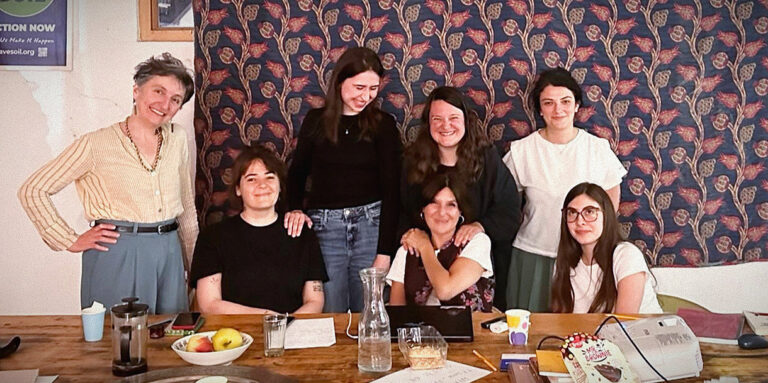
The wonderful photo is from a workshop: Amateur Documentary Filmmaking Workshop in French (!) Mentor: Elene Mikaberidze

WatchDocs Awards 2025/ 3

The judges of this year’s edition of the Green Competition were: Michalina Czervoonska, Urszula Jabło 🏆ska, Robert Jurszo.

🌿The jury awarded the Green Docs Award to Dmytro Hreshka for the movie “Divia”.
“Who will clean up after the war?” Who will disarm hundreds of thousands of landmines and missiles? Who will purify the water and recycle the tons of scrap that war machines turn into? Who will feed abandoned cats and who will restore a place to live for traumatized animals?

All these questions are provoked by the Divia movie. War is an unimaginable tragedy for everyone: people and other animals, plants, land. Dmytro Hreshko consciously refuses words and allows paintings to speak: hectares of burned forests, the fear of animals deafened by bomb explosions. War equates human and animal deaths, the earth treats every body the same way. However, we cannot hope that nature will always be revived. The movie Hreshko does not allow to take your eyes away from the ecocidal, which is part of the war in Ukraine. “

🌿 The distinction in the Green Competition was given to the film “Close to the Earth” directed by. Thomas Elshik.

“How to act when the case seems like a defeat?” Why renovate a dead endangered peat field or look for the perpetrators of poisoning wildlife if the sentences always seem too low? Where to get perseverance and hope from?

In the movie “Close to the Earth” the meaning seems to come from the action itself, the opportunity to participate in the richness of the tangles of earthly life, which in an age of flash and often irreversible change, seems more valuable than ever. Tomas Elsik allows us to look at plants or birds from a distance usually inaccessible to us, building intimacy between the viewer and many film characters. Human and inhuman threads intertwine, jumping between the scales of time and space. “

WatchDocs Awards 2025/2

Academic Cinema Association Awards

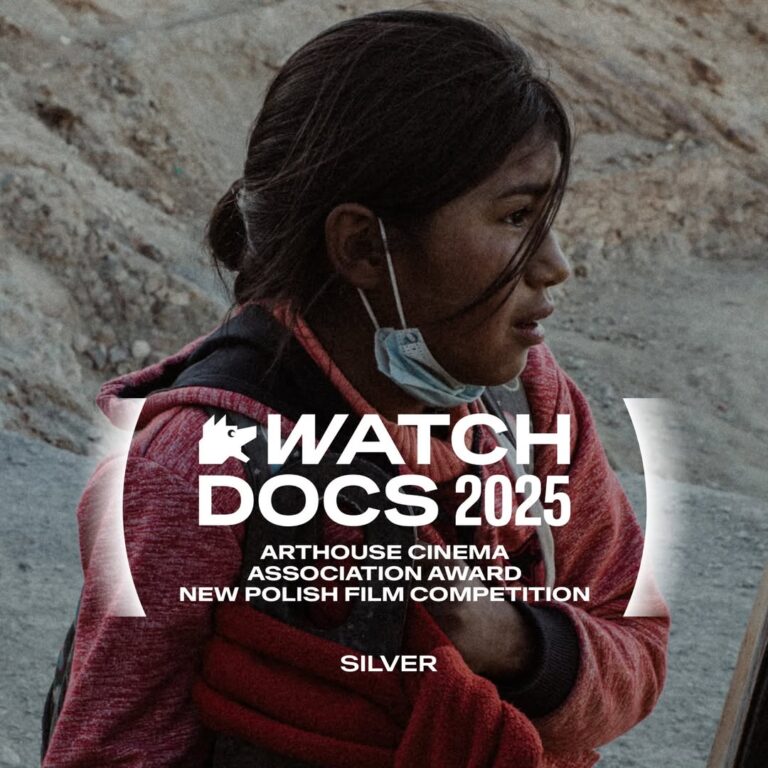
Jury in the team: Michał Konarski, Michał Surówka and Maja Gomulska awarded the film “Silver” directed by. Natalie Koniarz

“For the extraordinary combination of form and substance. Photos and camera work deserve attention and appreciation, showing how moving silence can be. The use of a wide frame in a documentary creates a sense of claustrophobic danger, in which various forms of goosebumps combine with human greed. However, breaking the editing key and the introduction of elements of magical realism does not undermine its documentation, but only complements the other elements of the film, so they form a well-thought and cohesive whole.”

“Silver” also got a Special Mention in the New Polish Films section, where the winner was “Child of Dust”. The jury consisting of Michał Merczy Jski, Paulina Reiter and Anna Wydra awarded the Grand Prize to the movie “Child of Dust” by Weronika Mliczewska. Motivations:

🟠 “We give the main prize to the movie, about which we can say with full responsibility, is an excellent document.
It is an emotionally moving, multidimensional, intellectually ambitious, sharp social criticism, at the same time intimate and taking on public, private and political issues, talking about a historical issue but also extremely relevant.

It’s a movie about how long the teddy bears are — it touches several generations every time. It’s a story about a moving absence of a father, about racial discrimination, and about a system that, although it seems to try to save a man, abandons him back to fate and separates him from his family again. It’s a visually beautiful image, with tenderness following the hero’s long and painful journey to regain his identity, sense of dignity and peace of mind. Tears of sadness and tears of joy of Mr. Sang, the extraordinary hero of the movie “Dust Child” directed by Weronika Mliczewska, will stay with us forever. „

🟠 Natalia Koniarz’s film “Silver”:

“For a staggering image of the profit that, unfortunately, we are all beneficiaries from, using electronics or using artificial intelligence.” “Silver” represents the fate of families — mothers, fathers and children — who are living in extreme poverty and working at risk in a Bolivian silver mine.

We observe environmental degradation and lack of social solidarity. An image that raises objections and questions as to how the world is still like this? Photos in the mountains are terrifying. We want to reward not only the weight of the topic and its take, but also the courage of the team. ”

WatchDocs Awards 2025/1

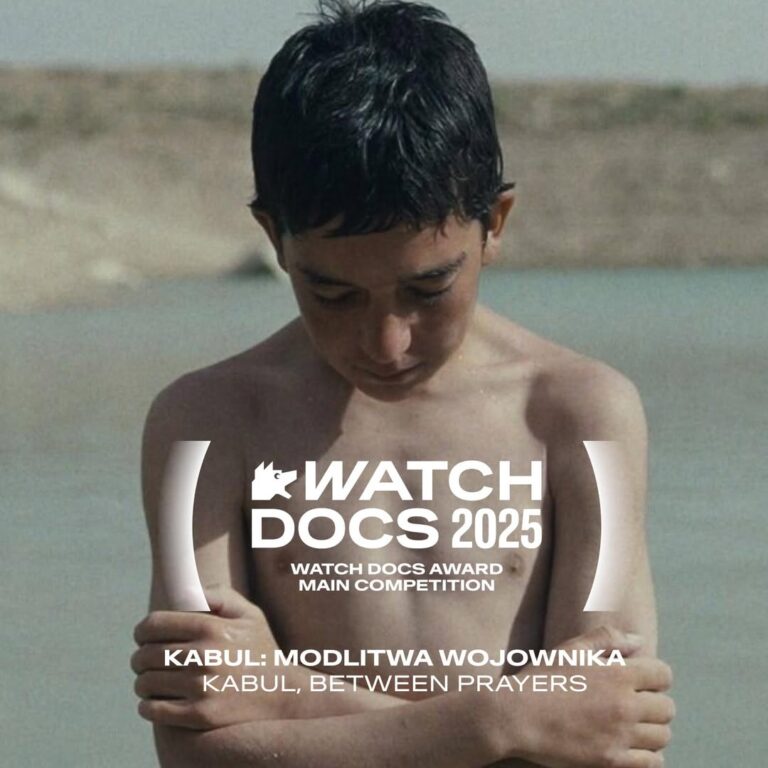
This year, 12 outstanding documentaries were competing for the DOCS Award. 🥇 The judges of the Main Competition were: Emi Buchwald, Niklas Engstrøm, Andrej Kuciła, Tue Steen Müller and Laura van Halsema.

🟠 “The jury of the Main Competition was impressed by the outstanding selection of films that took us to very different realities, viewed from multiple perspectives and told using a variety of visual languages.” First of all, we would like to thank all filmmakers and festivals for collecting their works and giving us the opportunity to watch and discuss together.

And while we agreed that there is something strange about comparing and classifying documentaries that represent a world in crisis on so many levels, we were unanimous in deciding which film to award the Best of Them.

“This film invites the viewer to a world rarely seen from the inside. With precision, care and without judgment, it shows the human faces of ideology and regime not usually associated with sensitivity or ambiguity. This is a movie that carefully composes each frame, and tells both what is in front of our eyes and what is left out. We have been transported to an unknown, sinister world in a subtle and moving way. The movie maker is completely in control of his material and shows outstanding cinematic talent in every frame and scene.”

🏆 The award for the best film in the Main Competition goes to the movie “Kabul. Warrior’s Prayer by Aboozar Amini